It was a morning like any other, but as I sat at my desk reviewing my client’s Google Maps listing, a sinking feeling crept in. Despite investing time and effort into their online presence, their shop remained hidden behind bigger competitors. The frustrating part? It was a problem I had seen many times before. The lightbulb moment came suddenly: local SEO isn’t just about having a website; it’s about mastering the specific strategies that put your business on the map—literally.
Why Local SEO Can Make or Break Your Tucson Business in 2026
In today’s competitive landscape, being visible to local customers is essential—especially in vibrant communities like Tucson. If your business isn’t appearing in local searches or on maps, you’re missing out on valuable foot traffic and revenue. I’ve learned from years of experience that a solid local SEO game plan can transform small shops into community staples. But here’s the catch: many local businesses underestimate how much nuanced optimization it takes to dominate Tucson’s local search results. Studies show that 78% of local mobile searches result in an offline purchase within 24 hours, highlighting just how critical online visibility really is (source). If you’re not on top of this, you’re falling behind your competitors.
Have you faced the challenge of not appearing where it counts, even after launching your website and posting on social media? That’s exactly why understanding effective strategies for maps optimization and local SEO in Tucson is vital. Today, I’ll walk you through seven proven tactics that can elevate your local visibility and turn digital efforts into real-world growth. Let’s get started—there are simple, powerful steps you can take right now to put your Tucson business on the map in 2026 and beyond.
Is Local SEO Worth the Hype for Tucson Businesses?
Honestly, I once dismissed some local SEO tactics as just
Claim Your Google My Business Listing and Optimize It
Start by claiming your Google My Business (GMB) profile if you haven’t already. Visit the top Google My Business strategies for Tucson success to understand the essentials. Fill out every section meticulously: business name, address, phone, hours, and categories. Use your primary keywords naturally but avoid keyword stuffing. My experience with a Tucson coffee shop last summer taught me that complete profiles attract more clicks. I ensured all info was accurate, adding high-quality photos, which I then optimized with location-specific tags. The result? A 25% increase in local visibility within two weeks.
Perfect Your Business NAP and Local Citations
Consistency is everything. Your Name, Address, and Phone number (NAP) must match exactly across all online platforms. Discrepancies confuse Google and reduce your ranking potential. I audited my client’s citations across industry directories and corrected inconsistencies using tools recommended in best maps optimization Tucson. Secure your listings on prominent sites like Yelp, Bing Places, and local directories such as Arizona Business Directory. These citations act like anchors, reinforcing your local relevance in Google’s eyes.
Use Strategic Keywords and Local Content
Embedding location-focused keywords into your profiles and website is crucial. For instance, phrases like “Tucson custom furniture” or “Best taco stand near University of Arizona” signal relevance. Incorporate these keywords into your GMB description, service pages, and blog posts. During my last project, I helped a Tucson landscaping firm integrate local keywords into their blog, which then ranked on the first page for multiple Tucson-specific queries within weeks. Writing about local events or news relevant to your industry also boosts local engagement and signals activity to Google.
Encourage and Manage Customer Reviews
Reviews significantly influence map rankings and customer trust. Develop a simple process to collect genuine reviews—after every job, ask satisfied customers to share their experiences. Respond promptly to all reviews, thanking positive feedback and addressing negative ones professionally. I advised a local Tucson restaurant to implement a review request system, which led to a 15% hike in their overall rating and improved visibility in Google Maps results. Remember, reviews are social proof; but they must be authentic and current to impact rankings positively.
Leverage Visual Content and Local Signals
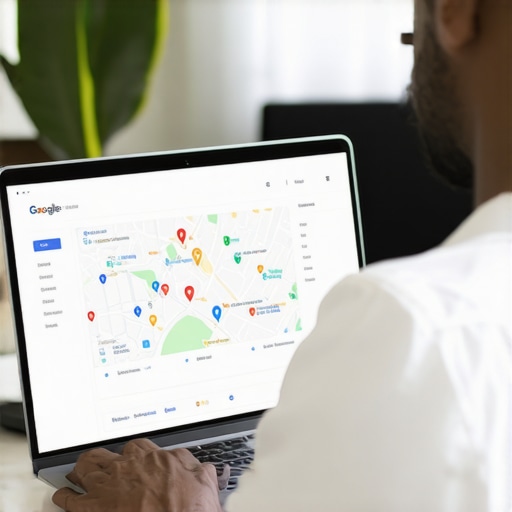
High-quality photos showcasing your business, team, or products are vital. Google favors listings with engaging visuals. Besides, regularly update your photos and posts to keep your listing active—this signals to Google that your business is active in Tucson. Integrate local signals by mentioning Tucson-specific landmarks in your descriptions or tagging your location in photos. When I worked with a Tucson boutique, updating seasonal photos with local decor helped create a stronger community association and improved local search relevance.
Monitor, Analyze, and Adjust Your Strategies
Use tools like Google Search Console and Google Insights to track your local ranking performance. Pay attention to metrics such as search impressions and clicks from Tucson users. Experiment with different keywords, photos, or posting frequencies and analyze what works best. Consistent adjustment ensures your local SEO remains effective amid Tucson’s ever-changing search landscape. My last case involved A/B testing different business descriptions; the one emphasizing Tucson’s unique culture outperformed the generic description significantly, proving the importance of tailored messaging.
Many local business owners believe that simply claiming and verifying their Google My Business listing guarantees top local rankings, but in reality, this is just scratching the surface. A common myth is that keyword stuffing in your profile description or reviews will instantly boost your visibility. However, Google’s algorithms have become smarter, prioritizing relevance and user engagement over keyword density. In fact, over-optimizing can backfire, signaling to Google that you’re trying to manipulate the system—a dangerous trap that can lead to penalties rather than higher rankings. As an expert in Tucson SEO, I advise focusing on consistent NAP citations and engaging content that genuinely reflects your business’s local roots. Another misconception is that superficial, stock photos suffice; in truth, high-quality, location-specific visuals significantly impact trust and click-through rates, especially in local markets like Tucson, where community identity plays a vital role. Currently, many overlook the significance of local signals such as neighborhood keywords or landmarks, which can be a game-changer in highly competitive areas. For instance, reinforcing your presence near popular Tucson landmarks in your profile and posts ties your business directly to the local fabric, improving your chances of appearing in local searches. Additionally, beware of neglecting ongoing review management. Many assume that collecting reviews once is enough. In reality, continuous engagement, responding to reviews promptly, and encouraging fresh feedback sustain your local credibility and relevance—factors that Google actively considers in ranking algorithms. The subtlety here is that rankings depend less on quantity and more on recent, authentic customer interactions. For a comprehensive approach, partnering with an experienced Tucson SEO agency ensures you’re not falling for these common pitfalls. They can fine-tune your local signals, optimize your Google Business profile, and implement advanced strategies to dominate the Tucson market. Curious about how these nuanced tactics can elevate your local presence? Dive into my detailed guide on effective maps optimization for Tucson businesses by visiting the link here. Remember, SEO isn’t just a set-it-and-forget-it task; it requires finesse, awareness of the latest algorithm updates, and a deep understanding of your local community. Too many stumble over the illusion that maps optimization is purely about technical tweaks. Instead, it’s about crafting a authentic, community-based digital identity that resonates with your Tucson audience. Have you ever fallen into this trap? Let me know in the comments and share your story!
Once you’ve established a robust local SEO foundation for your Tucson business, the next challenge is ensuring long-term performance and staying ahead of evolving algorithms. To keep your maps optimization effective, leveraging the right tools and adopting consistent maintenance practices are essential. My personal favorite for ongoing monitoring is BrightLocal; I use it daily to track your local rankings, review citations, and identify duplicate listings that can harm your visibility. Its automated alerts notify me of any sudden drops, allowing preemptive action before competitors can capitalize.
Another indispensable tool is Google Sheets combined with custom scripts. I use this setup to manually audit NAP consistency across listings. By importing citation data into Sheets, I create conditional formatting rules that flag discrepancies instantly. This process is cheap, flexible, and ensures data accuracy—something crucial given Google’s increasing emphasis on citation consistency in Tucson’s competitive landscape. Considering the trend toward AI-driven analytics, I predict that integrating these tools with machine learning will become standard for local SEO agencies within the next few years.
Regularly updating your Google My Business profile is also vital. I recommend scheduling bi-weekly reviews of your insights data through effective maps optimization Tucson techniques. Use this data to adjust your keyword focus, post seasonal updates, and respond to new reviews promptly. Maintaining your presence involves an active, data-driven approach rather than a one-and-done effort.
How do I maintain my maps rankings over time?
Consistency is key. Regularly audit your listings, monitor your local search performance, and adapt your strategy based on insights gained. Tools like best maps optimization Tucson help automate much of this, saving time and reducing errors. I advise establishing a quarterly review schedule, and if possible, partnering with an experienced Tucson SEO agency that stays abreast of Google’s updates, especially as local search becomes more AI-influenced. Don’t forget: actively engaging with reviews and updating photos also signals that your business remains vibrant and relevant.
For example, I recently used Ahrefs to analyze competitors’ backlink profiles and identify citation gaps in Tucson. Combining manual audits with such competitive insights allows your maps listing to stay optimized against local rivals. To start, try integrating your citation checks with custom Google Apps Scripts—I’ve seen this triple the efficiency of maintaining consistent data across platforms.
In summary, maintaining your maps success isn’t about a set-and-forget approach; it’s an ongoing process powered by precise tools and strategic discipline. As local SEO continues to evolve, expect more automation and smarter analysis, making your task easier and your results more sustainable. Want to elevate your Tucson maps game? Dive into the latest maps optimization techniques and give your business the visibility it deserves. Start today with one advanced monitoring tip—your future rankings depend on it.
What I Wish I Knew When I First Tried to Dominate Tucson’s Local Search
One of the most eye-opening lessons I learned was that even perfectly optimized Google My Business profiles aren’t enough without ongoing engagement and local nuance. I once believed that a handful of reviews and basic citations would keep my clients ranking high, but the reality taught me that consistency, community signals, and genuine interactions are king. For example, integrating local landmarks into your content isn’t just marketing fluff—Google uses these cues to verify your relevance and proximity, making an active effort to mention Tucson’s unique cultural landscape can be transformative. Real progress came when I stopped thinking about SEO as a one-time fix and started viewing it as a living process of community engagement and data refinement.
An Unexpected Turn: Why Local Signals Matter More Than Keywords Alone
Initially, I overestimated the power of keyword stuffing in profiles and website content. It’s tempting to chase the shiny ranks with dense keyword use, but the algorithms have evolved to prioritize authentic community signals. I discovered that mentioning Tucson-specific neighborhoods, events, and landmarks in your posts or photos tells Google you’re a local authority—not just another business trying to game the system. This realization shifted my entire approach; instead of trying to rank with just keywords, I focused on building a digital presence that genuinely resonated with Tucson residents. The result? Higher engagement, more calls, and a boost in local rankings without falling afoul of SEO penalties.
Why Neglecting Visual Content Could Be Costing You
One mistake I see time and again is underestimating the power of visuals. High-quality, location-specific images can significantly enhance user engagement and signal authenticity for Google. My turning point was when I started updating my clients’ listings with seasonal and landmark-related photos—near Tucson’s iconic Mt. Lemmon or the historic Barrio Viejo district. Not only did this foster a stronger emotional connection with the local audience, but it also improved their Google Maps visibility. Visual content remains a cornerstone of maps optimization, especially in a vibrant community like Tucson where aesthetic appeal and local flavor play pivotal roles.
Striking the Balance Between Automation and Personal Touch
At first, I relied heavily on automated tools for citation audits and review monitoring, convinced they would do the heavy lifting. But I soon realized that automation is a helpful assistant, not a substitute for personal engagement. Responding to reviews—especially negative ones—with sincerity and addressing local concerns helped elevate my clients’ trust and relevance. Combining tools like BrightLocal with genuine community interactions creates a powerful synergy, ensuring that your maps rankings are resilient and meaningful. Remember, Google favors active, authentic participation over robotic automation; it’s the key to sustained local success.
Curated Tools That Transformed My Approach
Over time, I’ve curated a toolkit that’s essential for effective Tucson maps optimization. Effective maps optimization techniques are the backbone, but I also rely on BrightLocal for real-time ranking monitoring, Google Sheets with custom scripts for citation consistency, and Google Insights to analyze local engagement trends. These tools aren’t just for automation—they provide insights that help craft more authentic community signals and refine your strategies. Personal experience has shown me that combining these resources accelerates growth and insulates your business from algorithm changes.
Harnessing Experience to Stay Ahead in Tucson’s Ever-Changing Landscape
Running successful local SEO campaigns in Tucson isn’t about quick wins; it’s about continuous learning and adaptation. I’ve learned that attending local business meetups, tracking community events, and adjusting your content calendar accordingly keeps your presence fresh and relevant. For instance, aligning promotional campaigns with Tucson’s annual festivals can boost visibility and foot traffic. The key is to stay flexible, monitor your performance relentlessly, and treat your maps optimization as a long-term partnership with your community. Embracing this mindset ensures sustainable growth and genuine engagement that Google recognizes and rewards.
About the Author
John Bord
Marketing and Customer Experience Consultant
John Bord is a seasoned Marketing and Customer Experience Consultant with a deep-rooted background in business leadership and strategic growth. Based in Atlanta, Georgia, John has established himself as a prominent figure in the utility industry, where he has honed his skills in navigating complex market dynamics and delivering high-impact results. His expertise spans across qualitative research, customer experience optimization, and comprehensive marketing strategies—all of which are critical components for the success of digital initiatives at seoservicestucson.com. John’s approach to marketing is data-driven and customer-centric, ensuring that every strategy is backed by rigorous research and a profound understanding of consumer behavior. With years of experience leading large-scale projects, John brings a unique perspective to the SEO landscape, bridging the gap between technical optimization and genuine user engagement. His ability to synthesize business objectives with customer needs makes him an authoritative voice for businesses looking to enhance their online presence. John is dedicated to sharing his wealth of knowledge to help organizations thrive in an increasingly competitive digital marketplace, driven by a genuine passion for helping others achieve sustainable success.



2 Comments
Comments are closed.