How to Stop National SEO Tools From Ruining Your Tucson Map Ranking
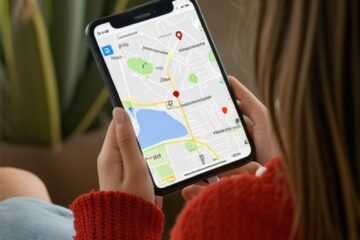
You’re staring at your dashboard, and it looks like a sea of green. Your national SEO tool – be it Semrush, Ahrefs, or Moz – tells you that you’re ranking #1 for your primary keywords. You should be celebrating, right? But then you look at your call log. It’s silent. You drive down to a coffee shop in the Catalina Foothills or grab a bite in South Tucson, pull out your phone, and search for your own business. You’re nowhere to be found. You’ve fallen into the “Tucson Map Gap.”
The “Tucson Map Gap” is a phenomenon where a business achieves technical SEO success on a national scale but remains invisible to the people who actually live and work in the Old Pueblo. In 2026, this gap has widened into a canyon. As AI-driven search filters become the standard, the broad, generalized data provided by national SEO tools is becoming less of a guide and more of a liability. If you want to dominate the local market, you need to understand google business profile seo from a hyperlocal perspective, not a global one. The “National Tool Trap” is real, and it’s costing Tucson business owners thousands in lost revenue every month.
The “National Tool Trap”: Why Ahrefs and Semrush Won’t Save Your Map Pack Ranking
National SEO tools were built for a different era of the internet – an era where “search volume” was the king of all metrics. These platforms are incredible for tracking global trends and backlink profiles, but they are fundamentally disconnected from how the Google Map Pack actually functions in a city like Tucson. While these tools prioritize high-authority global backlinks and broad keyword difficulty, Google’s local algorithm is playing a completely different game based on Proximity, Relevance, and Prominence.
Research indicates that Google uses over 200 ranking factors, but for a local search in Tucson, “distance from the searcher’s location” remains a primary driver. A national tool might tell you that you “rank” for “plumber,” but it isn’t telling you that you only rank for that term when someone is standing within three blocks of your office on Broadway Blvd. It doesn’t account for the fact that a searcher in Marana sees a completely different Map Pack than someone in Sahuarita.
When you rely solely on these tools, you end up optimizing for “vanity metrics” that don’t translate to local foot traffic. You might spend months building a backlink from a high-authority national blog, only to find that a competitor with three local mentions from the Tucson Sentinel or a local neighborhood association is outranking you. This is because national tools don’t understand that local relevance is weighted more heavily than global authority in the 3-pack. Furthermore, many businesses fail to realize that why your Arizona service area settings are actually hiding your Tucson shop from locals is a technical nuance that broad tools simply cannot detect.
The Tucson Neighborhood Factor: Hyperlocal vs. Global Data
Tucson is not a monolith. It is a collection of distinct neighborhoods, each with its own search identity. From the historic charm of Barrio Viejo to the sprawling growth of Oro Valley, the way people search – and the way Google interprets those searches – varies wildly. Broad SEO tools often treat “Tucson” as a single geographic point, usually centered on the downtown area. However, “Tucson SEO” isn’t just one keyword; it’s a collection of neighborhood entities.
To truly master google business profile seo, you must pivot toward google business profile seo strategies that acknowledge these boundaries. If you are a landscaper, ranking in “Tucson” is a start, but ranking in “Tanque Verde” or “Civano” is where the high-value contracts are found. National tools don’t show you the “heat map” of your visibility across these specific zones. They don’t tell you that your rankings drop off a cliff the moment a searcher crosses Campbell Avenue.
This lack of geographic nuance leads to the creation of “thin” content. Many national agencies will tell you to create “city pages” for every suburb in Arizona. This is a mistake in 2026. Google’s AI now recognizes these as low-value, templated pages. We have seen time and again why Tucson pest control leads vanish when you use generic city pages. Instead of broad strokes, you need to feed Google’s “Knowledge Graph” with specific neighborhood entities, local landmarks, and Tucson-centric data that proves you are a part of this community, not just a business with a P.O. Box here.
2026 Ranking Signals: Moving Beyond NAP Consistency
For years, the “holy grail” of local SEO was NAP consistency – ensuring your Name, Address, and Phone number were identical across the web. In 2026, NAP is no longer a competitive advantage; it is “table stakes.” If your NAP is wrong, you’re in trouble, but if it’s right, you’re just at the starting line. The algorithm has shifted toward Entity-Based SEO and Map Engagement Signals.
Google’s AI-driven search filters now look at how users interact with your profile in real-time. Are people clicking your “Directions” button? Are they calling you directly from the search results? Are they lingering on your photos? These engagement signals are far more influential than a standard directory listing. Using local seo ranking tools that actually track these interactions is vital. National tools often ignore these “micro-conversions,” leaving you in the dark about why your ranking is stagnant despite having “clean” citations.
One of the most surprising 2026 ranking factors discovered in recent YouTube and industry research is the impact of “closing time” on real-time visibility. Google has become increasingly hesitant to show “Closed” businesses in the Map Pack for urgent searches. If you’re an emergency plumber in Tucson and your profile says you close at 5:00 PM, you will vanish from the maps at 5:01 PM, even if you are the most “authoritative” business in town. This real-time filtering is something national tools are not equipped to track. It is also why many experts now argue that Arizona Local SEO: Why NAP Consistency is Overrated in 2026 is a conversation every business owner needs to have.
The “Invisible Profile” Audit: 3 Fixes for Tucson Businesses
If you feel like your business is invisible despite your best efforts, you likely have a technical disconnect between your Google Business Profile (GBP) and the local algorithm. Here are three actionable fixes to stop the “National Tool Trap” from ruining your ranking:
- Fix Service Area Overlap: Many Tucson businesses try to “carpet bomb” the map by selecting every city from Nogales to Phoenix in their service area settings. This dilutes your local relevance. Google’s AI sees this as a lack of focus. Limit your service area to the actual neighborhoods you serve to increase your “Proximity” score.
- Use Tucson-Specific Schema: National tools rarely provide the granular schema code needed for local dominance. You need to implement
LocalBusinessschema that includes specificsameAslinks to local Tucson organizations (like the Tucson Chamber of Commerce or the YWCA Tucson). Check out the specific schema code Tucson businesses need to win the top map spot for a template. - Audit for “Hidden Search Penalties”: If you’ve hired a national agency in the past, they may have built “junk” backlinks to your profile. These are often low-quality, automated links that national tools might flag as “low risk” but which Google’s local AI views as spam. You must perform a deep audit. Learn how to audit your Tucson Google profile for hidden search penalties to ensure your foundation is clean.
To get a clear picture of where you stand, don’t rely on a global dashboard. Use a specialized google business profile audit tool that focuses specifically on the local Map Pack ecosystem. This will reveal the gaps that Ahrefs and Semrush are designed to ignore.
Why Phone Calls Beat “Rank” in the Old Pueblo
As a mentor at the YWCA Tucson’s Women’s Business Center, I see business owners get caught up in the “ego” of ranking. They want to be #1 for the sake of being #1. But in the Old Pueblo, visibility is useless if it doesn’t lead to a conversation. A #1 rank is a vanity metric if the “Call” button isn’t being clicked. This is the ultimate failure of national SEO tools: they track positions, not human behavior.
Data from r/localseo and other industry hubs shows that the top 3 results on Google Maps get the overwhelming majority of clicks and calls. However, being in the top 3 is only half the battle. To convert a searcher into a caller, you need Review Velocity and Photo Freshness. Tucsonans are loyal, but they are also savvy. They look for recent reviews that mention local context – “They arrived at my house in Sam Hughes within 20 minutes!” – and they look for photos that show you actually working in the Tucson heat.
If you are optimizing for a tool instead of a neighbor, you will lose the conversion every time. We must shift our focus to measuring what matters: Why phone calls beat rank for Tucson service businesses. This means updating your GBP photos weekly, responding to every review within 24 hours, and using a get more calls from google maps strategy that prioritizes user trust over keyword density.
Conclusion: Reclaiming Your Local Territory
The landscape of search has changed. In 2026, the “one-size-fits-all” approach of national SEO tools is no longer enough to keep your Tucson business on the map. These tools are like using a telescope to find your car keys – they are simply the wrong scale for the task at hand. To dominate the Old Pueblo, you must embrace a strategy that is as unique as a Tucson sunset.
Stop letting national software dictate your local success. Reclaim your territory by focusing on entity-based SEO, neighborhood-specific relevance, and real-world engagement signals. It’s time to stop worrying about global search volume and start worrying about local phone calls. If you’re ready to see where you actually stand, it’s time to move beyond the national tools and explore a specialized google maps ranking service that understands the nuances of the Tucson market. Your neighbors are searching for you – make sure they can actually find you.
About the Author: Elaine B. is a Tucson-based Local SEO expert and a dedicated mentor at the YWCA Tucson’s Women’s Business Center. With over a decade of experience helping Tucson businesses navigate the complexities of search engines, she specializes in diagnosing why Google visibility isn’t turning into actual phone calls. When she isn’t auditing Google Business Profiles, she’s advocating for the growth of women-owned businesses throughout Southern Arizona.