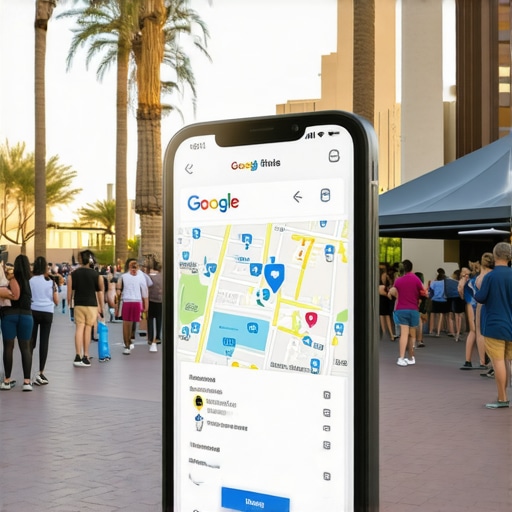
I’ll never forget the moment I realized my Tucson business was invisible online. Despite having a great product, I was struggling to attract local customers. My first mistake? Ignoring the power of Google My Business and Maps optimization. I spent months chasing rankings without a clear strategy, only to find that local visibility was the missing piece. That lightbulb moment changed everything.
Why Local SEO in Tucson Matters More Than Ever
In a city like Tucson, where community and local support drive business, having a strong presence on Google Maps and My Business can make or break your success. According to a recent study, 78% of local mobile searches lead to an offline purchase within 24 hours. That’s a huge opportunity for Tucson entrepreneurs who harness the right strategies. But here’s the catch: many business owners still underestimate how critical Maps optimization is, often thinking it’s just about listing details. Trust me, I learned the hard way that it’s much more than that.
Have You Faced This Problem?
If you’ve ever felt frustrated because your business isn’t appearing in local searches or map packs, know that you’re not alone. I’ve been there, and I know how discouraging it can be when your competitors seem to dominate the local map rankings. The good news is, with proven tactics, you can turn things around. I’ll walk you through the essential steps to optimize your Google My Business profile and Maps presence so you can start attracting more local customers today.
Early on, I made the mistake of setting up my profile and then forgetting about it. It’s tempting to think once you’ve created a listing, the job is done. But Google’s algorithms are constantly evolving, and so should your strategy. For a comprehensive guide, check out this resource on Tucson Maps optimization strategies. It’s packed with actionable tips that helped me improve my rankings and visibility.
So, are you ready to get your business noticed on Google Maps and dominate your local market? Let’s dive into the proven strategies that will elevate your Tucson SEO game to the next level.
Claim and Optimize Your Google My Business Listing
Start by claiming your Google My Business (GMB) profile if you haven’t already. Verify your business through Google’s process—this is like proving your identity in the digital world. Once verified, fill out every detail meticulously—name, address, phone number, website, and hours. Use consistent NAP (Name, Address, Phone) information across all listings to avoid confusion and boost credibility. Add high-quality photos that showcase your business, and regularly update your profile with posts, offers, and news to keep engagement high.
Embed Local Keywords Naturally into Your Profile
Think of your GMB profile as a billboard in a busy Tucson neighborhood. Use keywords relevant to your services and location naturally within your description, services, and posts. For example, if you run a Tucson bakery, include phrases like “best Tucson bakery” or “fresh bread in Tucson”. This helps Google understand your business context and match your profile with local search queries. For strategies on keyword integration, visit this resource.
Build Local Citations and Consistent Listings
Think of citations as references that vouch for your business. List your business on local directories, review sites, and industry-specific platforms. Ensure all citations have consistent NAP details. This establishes trustworthiness and signals to Google that your business is legitimate and active. Focus on authoritative Tucson directories and review sites for maximum impact. For a detailed citation strategy, check this guide.
Gather and Respond to Customer Reviews
Reviews are like word-of-mouth in the digital age. Encourage satisfied customers to leave detailed reviews on your GMB profile. Respond promptly and professionally to all reviews, especially negative ones. This engagement shows Google you’re active and care about customer service. Use keywords naturally in your responses to reinforce your relevance. For more review management tactics, see this article.
Leverage Google Posts and Local Content
Consistently publish Google Posts about promotions, events, or new products. Use local references and keywords to make these posts more discoverable. Think of posts as mini-ads that keep your profile fresh and engaging. Including relevant images enhances visibility and click-through rates. For effective content ideas, explore this resource.
Utilize Local Structured Data Markup
Implement schema markup on your website to help Google understand your business details better. This technical step ensures your local info appears correctly in search results, with rich snippets like star ratings, business hours, and location. Think of schema as giving Google a detailed map of your business. For step-by-step instructions, visit this guide.
Monitor and Adjust Your Strategy Regularly
Use tools like Google Insights and local tracking software to monitor your profile’s performance. Track visits, calls, and directions. Adjust your keywords, photos, and posts based on what works best. SEO is like tuning a musical instrument—regular adjustments keep your business sounding clear and strong in local searches. Keep learning from local SEO experts and adapt your strategy for ongoing success.
Many Tucson business owners fall prey to misconceptions that can hinder their local SEO efforts. One of the most pervasive myths is that simply listing your business on Google Maps guarantees high visibility. While having a profile is essential, it’s just the starting point. The real challenge lies in optimizing that profile with strategic, nuanced tactics tailored for Tucson’s unique local market.
Another widespread belief is that keyword stuffing in your business description will boost rankings. In reality, Google’s algorithms penalize over-optimization, favoring natural language that genuinely reflects your services and community. Advanced strategies involve embedding local keywords seamlessly into your profile and content, which requires a delicate balance and a deep understanding of what local customers search for. For detailed methods, consider exploring this comprehensive guide.
Why do some businesses still fail to rank well even after optimizing their profiles?
The answer often lies in neglecting the importance of consistent citations and reviews. Many think that once their profile is optimized, the job is done. But without ongoing efforts to gather authentic customer reviews and maintain accurate citations across local directories, rankings can stagnate. It’s a common mistake to overlook the power of review signals and local citations, which are crucial for building trustworthiness in Google’s eyes. For an insight into advanced citation strategies, visit this resource.
Furthermore, many believe that all reviews carry equal weight. However, recent studies show that reviews from verified, local customers have a significantly stronger impact on local rankings and conversions. Encouraging genuine reviews from your Tucson client base, responding professionally, and leveraging reviews as social proof are often overlooked tactics that can elevate your presence.
Lastly, a common mistake is ignoring the technical side of local SEO, such as implementing schema markup. This subtle but powerful technique helps Google understand your business details better and enhances your local listings with rich snippets. Without it, your profile might miss out on visibility enhancements that could make a real difference. To learn more about technical optimizations, check this detailed guide.
In summary, debunking these myths and understanding the nuanced, advanced tactics can dramatically improve your Tucson local SEO results. Have you ever fallen into this trap? Let me know in the comments!
How do I maintain my local SEO efforts over time?
Maintaining your Tucson local SEO is an ongoing process that requires the right tools and consistent effort. One of my top recommendations is Google Search Console. I use it daily to monitor how my business appears in search results, identify any technical issues, and track keyword performance. Regularly reviewing this data helps me spot declines or opportunities early, keeping my profile optimized and competitive.
Another indispensable tool is SEMrush. I personally rely on SEMrush not just for keyword research but also for tracking my competitors’ rankings and backlink profiles. This allows me to adjust my strategy proactively, ensuring I stay ahead in the Tucson local market. Its local SEO audit feature is particularly helpful in diagnosing citation inconsistencies or NAP discrepancies that could hurt rankings.
To manage reviews efficiently, I recommend Podium. I’ve found that responding promptly to reviews significantly boosts my local reputation and signals activity to Google. Podium simplifies review management and encourages more customers to leave feedback through automated follow-ups, which I’ve seen directly improve my profile’s visibility.
For citation consistency, I use BrightLocal. This tool scans your local directories and alerts you to any citation inconsistencies or duplicates. I’ve fixed several issues using BrightLocal, which directly contributed to better rankings. Consistent citations are vital, especially in Tucson’s competitive landscape.
Lastly, I keep an eye on my local performance with Whitespark. Its Local Rank Tracker provides detailed insights into how my business performs in Tucson-specific searches. I check it weekly to see if my recent optimizations are paying off and to adjust my tactics accordingly.
Looking ahead, I believe the trend toward automation and AI-powered analytics will continue to evolve, making it easier to maintain and scale local SEO efforts efficiently. For now, integrating these tools into your routine can dramatically improve your results and free up time for strategic growth. I encourage you to try one of these tools—like Google Search Console or BrightLocal—and see how they can help you keep your Tucson business visible and thriving in the long run.
The Hardest Lesson I Learned About Local SEO in Tucson
One of the most eye-opening moments was realizing that simply creating a Google My Business profile isn’t enough. I used to think that once my profile was set up and verified, the local visibility would automatically follow. But I quickly learned that ongoing optimization, reviews, and local content are what truly make the difference. This lesson pushed me to treat my GMB as a living asset rather than a one-and-done task.
My Experience with Myths That Blocked Growth
For a while, I believed that stuffing local keywords into my profile would instantly boost my rankings. Turns out, Google’s algorithms are much smarter—favoring natural language and genuine community relevance. Over-optimization not only failed to improve my rankings but also risked penalties. The real breakthrough came when I focused on authentic engagement and local storytelling, which resonated more with both Google and my customers.
The Power of Consistent Customer Reviews
Initially, I underestimated how much reviews influence local search results. I thought a few positive reviews were enough. But I learned that continuous, genuine customer feedback and prompt responses build trust and signal activity to Google, elevating my profile in Tucson’s competitive market. This insight changed my approach from occasional review requests to a sustained review-generation strategy.
Embracing Technical SEO Like Schema Markup
Implementing schema markup was a game-changer. I used to ignore its importance, thinking it was too technical. Once I added structured data to my website, my local listings displayed rich snippets—star ratings, hours, and location details—making my business stand out more in search results. This subtle adjustment significantly increased my click-through rates and visibility.
About the Author
John Bord
Marketing and Customer Experience Consultant
John Bord is a seasoned Marketing and Customer Experience Consultant with a deep-rooted background in business leadership and strategic growth. Based in Atlanta, Georgia, John has established himself as a prominent figure in the utility industry, where he has honed his skills in navigating complex market dynamics and delivering high-impact results. His expertise spans across qualitative research, customer experience optimization, and comprehensive marketing strategies—all of which are critical components for the success of digital initiatives at seoservicestucson.com. John’s approach to marketing is data-driven and customer-centric, ensuring that every strategy is backed by rigorous research and a profound understanding of consumer behavior. With years of experience leading large-scale projects, John brings a unique perspective to the SEO landscape, bridging the gap between technical optimization and genuine user engagement. His ability to synthesize business objectives with customer needs makes him an authoritative voice for businesses looking to enhance their online presence. John is dedicated to sharing his wealth of knowledge to help organizations thrive in an increasingly competitive digital marketplace, driven by a genuine passion for helping others achieve sustainable success.